Collapsible text for fig. 20: Yuru, Vanessa, Samuel, and Samee are standing by the APS poster (from left to right).
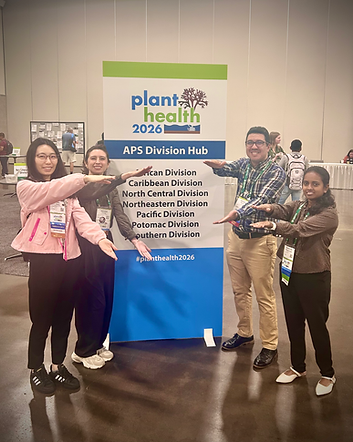
Members of the Martins Lab from left to right: Yuru, Vanessa, Samuel, and Sameerika presented their research at the APS Plant Health 2026 Annual Meeting in Providence, Rhode Island (Aug 2026)!
The Martins Lab enjoyed a great lunch at Sushi restaurant to celebrate Toi's farewell and Samee's birthday in June 2026. Wishing them both all the best!
.jpeg)
Collapsible text for fig. 19: Toi, Samee, Samuel, Vanessa, and Yuru are having lunck at Tamaya Sushi & Grill (from left to right).
Collapsible text for fig. 18: Samuel, Vanessa, Yuru, and Sameericka are holding watermelons.

The Martins Lab harvest watermelons in Gulf Coast Research and Educational center (GCREC) during the 2nd Biennial Research & Professional Development Symposium in May 2026.
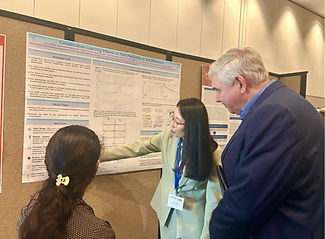
Collapsible text for fig. 15: Yuru is presenting her poster to the Dr. Wysocki.
.jpeg)


Yuru and Sameerika present their poster "Collabrative learning effects on test performance and efficiency" at the 2026 Interface Teaching Conference held on Apr 28-29 at the Ritz Union.
Collapsible text for fig. 16: Sameerika is presenting her poster to the Dr. Wysocki.
Collapsible text for fig. 17: Yuru and Sameerika standing by their poster.
The Goggles Might Be From 80's, but the Data is Spring 2026. From left to right: Samuel, Fabiano, Sameerika, Toi.

Collapsible text for fig. 15: Samuel, Fabiano, SAmeerika, and Toi taking selfies in the lab.
Collapsible text for fig. 1: Martins lab members enjoying a BBQ dinner together.

The Martins Lab gathered at Beque Holic for our year-end lab family celebration (Dec 2025). The group photo captures everyone smiling and enjoying the warm, festive atmosphere as we came together to celebrate the holidays and reflect on another productive year.
Several members of the Martins' Lab (from left to right: Sameerika, Vanessa, Yuru, and Samuel) helped host the Plant Pathology booth at the Fall Festival 2025 on November 20. We had a wonderful time sharing our passion for plant health with the community! Visitors enjoyed picking up our fun “PLANTS GET SICK TOO” stickers, magnets, and buttons, and exploring hands-on demonstrations, including fungal specimens, in vitro fungal cultures, root-knot nematodes, and glowing bacterial fluorescence under UV light. It was a fantastic event full of learning, curiosity, and smiles!

Collapsible text for fig. 2: Dr. Martins, Dr. Paret, and student event organizers standing by the plant pathology desk.
Collapsible text for fig. 3: Dr. Martins, Dr. Song, and other participants standing in front of the screen.

Martins' Lab had a blast presenting "Microbes Under Your Feet" to K-12 teachers in Florida, sparking their interest in plant pathology! Big thanks to Song's Lab for the invite. (June, 2025)


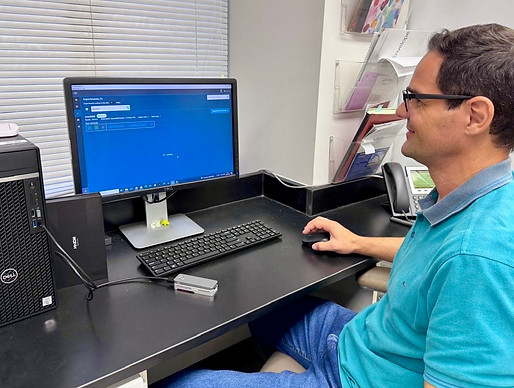
Collapsible text for fig. 4: Top left: Computer screen. Bottom left: Nanopore MinIon Sequencer. Right: Dr. Perina is sitting in front of the computer and using the software.
Exciting research underway in our lab with visiting scientist Dr. Fabiano Perina from the Brazilian Agricultural Research Corporation (EMBRAPA)! Here, Fabiano is using the Nanopore MinION sequencer as part of his work to develop rapid, third-generation sequencing diagnostics for Meloidogyne enterolobii. This emerging plant-parasitic nematode causes widespread damage to crops globally. This collaboration underscores our commitment to advancing innovative molecular tools for accurate diagnostics and sustainable control strategies in plant disease management.


Collapsible text for fig. 5: Two pictures of Sameerika working in mushroom house.
Commercially grown white button mushrooms (Agaricus bisporus) are highly susceptible to bacterial blotch, a disease caused by Pseudomonas species. Estimated yield losses range from 10-25%, significantly impacting mushroom quality and marketability.
To tackle this issue, our lab are actively investigating bacterial blotch pathogens and microbiome interactions in healthy and diseased mushrooms. As part of an USDA research, our team lead my the Ph.D. student Samemerika are visiting mushroom farms across the Southern U.S. to collect samples and engage with growers to better understand the distribution and impact of these pathogens.

Collapsible text for fig. 6: Group picture or a farewell to Victor.
We gathered this Summer 2024 for a farewell to Victor after he spent 9 months as a visiting scholar from Brazil in our lab. We will miss you, Victor.
From left to right: Mukesh, Jessica, Victor, Samuel, Josie, Toi.
Toi presented at the Emerging Pathogens Institute Research Day 2024 on exploring the ecological ramifications of antibiotic intervention in Citrus reticulata through its effects on rhizosphere bacterial communities and metabolites.

Collapsible text for fig. 7: Toi is presenting in front of his poster.
Collapsible text for fig. 8: Roshni is presenting her poster to the audience.

Roshni Sawlani presented a poster at the Spring CUR Symposium on the impact of Meloidogyne enterolobii and soil types on tomato plant chlorophyll content.
Josie presented at the Emerging Pathogens Institute Research Day 2023 on the impact of successive soil cultivation on Meloidogyne enterolobii infection and on soil bacterial assemblages [open access link].
Toi processing citrus root samples for antibiotic analysis


Collapsible text for fig. 9: Josie is presenting in front of her poster.
Hiago and Josie collecting soil samples from an organic tomato field at the Gulf Coast Research and Education Center

Collapsible text for fig. 10: Left: Toi is doing bench work. Right: Two students are collecting soil samples in the field.
Collapsible text for fig. 11: Four students are in the greenhouse behind the tomato plants.
Asif (left) & Samantha (right) getting ready to quantify samples with nematodes under the microscope.


From left to right: Josie, Roshni, Toi, and Malia getting ready to assess the damage caused by plant parasitic nematodes in tomato plants
Collapsible text for fig. 12: Asif and Samantha are quantifying nematodes.

Naomi Greenberg (top left) & Ellen Fleming (bottom right) presenting their research at the 2022 UF Undergraduate Research Symposium.
Collapsible text for fig. 13: Top left: Naomi is presenting her poster. Bottom right: Ellen is presenting her poster to an audience.

Samuel at Citra, FL, sampling & Ellen working on serial dilutions in the lab.
Collapsible text for fig. 14: Top left: Dr. Martins is sampling citrus leaf. Top right: Ellen is working under the hood. Bottom left: sandy soil. Bottom right: five media plates of serial dilutions.